
HDD Scrap Buying in Canada | Ohata Shoji Canada Inc.
Last updated: Jun 06,2026 - based on current market conditions.
Ohata Shoji Canada Inc. buys hard disk drives for recycling at the Ohata Shoji Canada Recycling Yard in Delta, BC, Canada. We evaluate loads based on condition, completeness, and whether key components are still present so we can quote fairly for your material.
We handle everything from small lots to bulk quantities, including units that are damaged or drilled for data-security disposal.
Hard Disk Drive Purchases
we buy hard disk drives (HDDs) removed from computers.
An HDD is a computer component used to store data, and it has been installed in many desktop and laptop systems for decades.
- Some older computers may not include an HDD.
- Some newer computers use SSDs instead of HDDs.
we buy HDDs for metal recycling, including the precious metals contained in the circuit board and the neodymium used in the drive’s magnet assembly. For this reason, we can often purchase HDDs even if they are not working, as long as the parts have not been removed.
Some customers drill holes in HDDs before disposal to help prevent data leakage. We can also purchase HDDs that have been drilled.
Because these HDDs are purchased for recycling rather than reuse, physical damage such as drilling is not an issue.
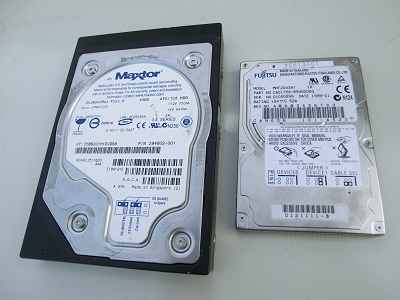
We buy hard disks (HDDs)
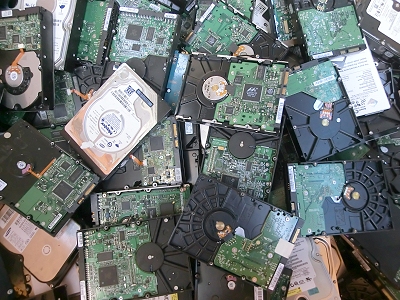
We receive large quantities of hard disks (HDDs)
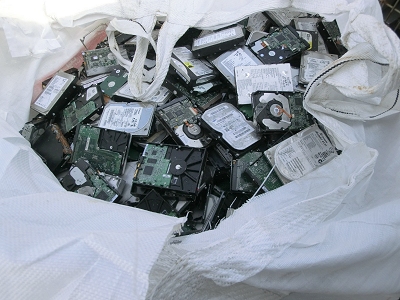
Hard disks (HDDs) can weigh up to 700-800lb per flexible container.
However, if the circuit boards or neodymium magnets have been removed, we cannot purchase them as complete HDDs.
HDD Components and Where the Valuable Parts Are
The aluminum case contains the disk (platter) that records data, the motor that rotates it, and the head assembly that reads and writes data.
The neodymium magnet mentioned above is located around the end of the head assembly (opposite the tip of the head).
Below is an example of an HDD being disassembled.
Disassembly may require a star-shaped (Torx) screwdriver. Screws may also be hidden under labels or stickers, so please check carefully.
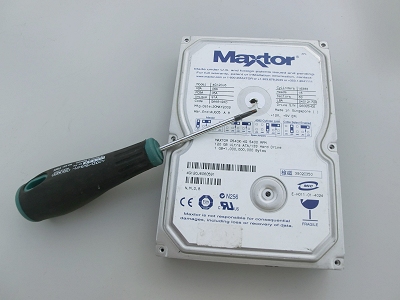
Disassembly with a Torx screwdriver
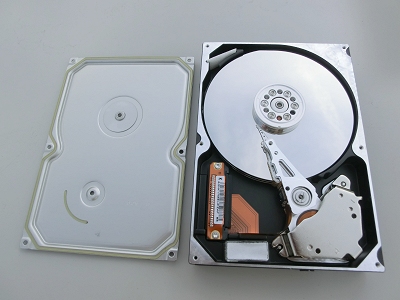
Top cover opened
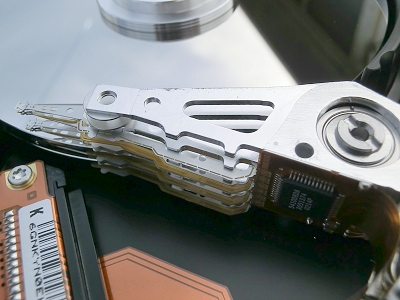
Head section
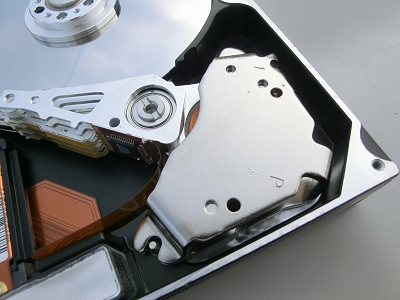
The neodymium magnet is located on the opposite side of the head.
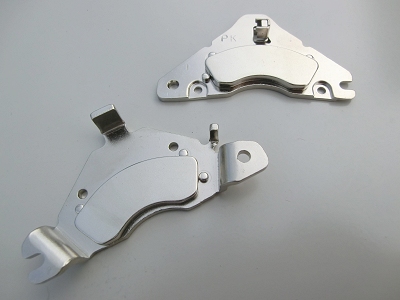
Neodymium magnet (the convex part in the center of the left and right metal pieces)
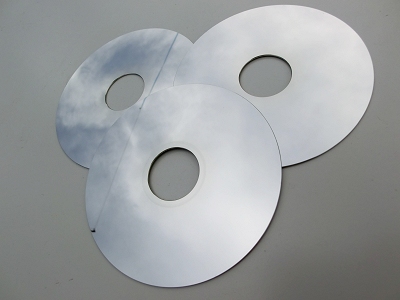
Removed disk
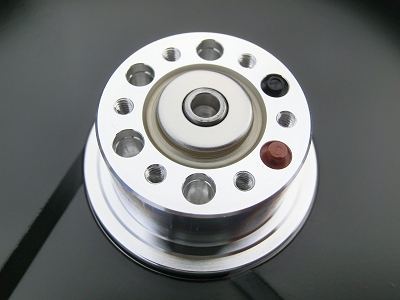
Motor that rotates the disk
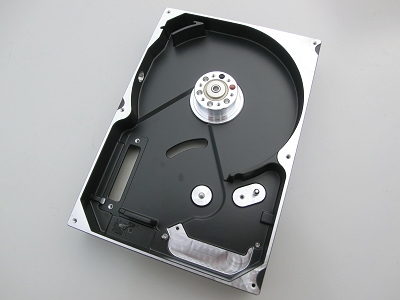
Motor and aluminum case
The back of the HDD has a circuit board that includes the read/write control components, memory, power connection, and the interface used to connect to the computer.
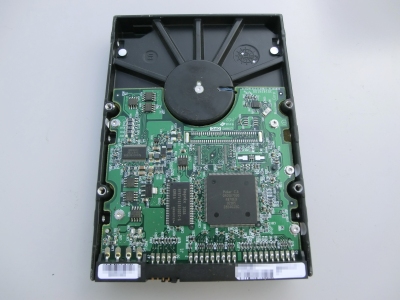
Circuit board on the back of the hard disk (HDD)
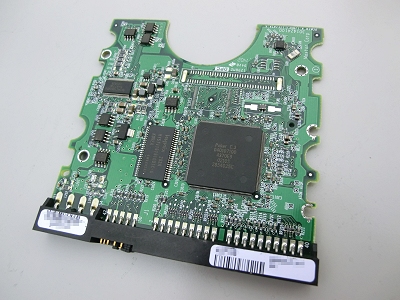
Circuit board removed
The basic structure of HDDs is generally similar across older and newer models, and across desktop and laptop sizes.
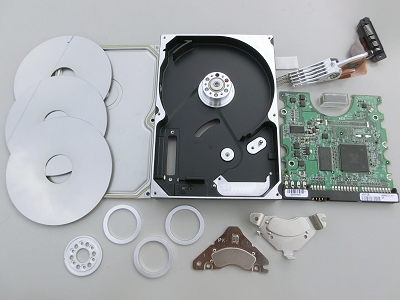
After disassembling a hard disk (HDD)
Please note that once an HDD is opened, dust can enter and the drive will typically no longer be usable for normal operation.
Because recording density is high, even small dust contamination can prevent proper reading and writing. If you plan to disassemble, please use an HDD intended for disposal.
Common HDD Sizes and Interface Types
HDDs come in several physical sizes. For example...
- 5.25 inches
- 3.5 inches
- 2.5 inches
- 1.8 inches
Drive thickness can also vary by model.
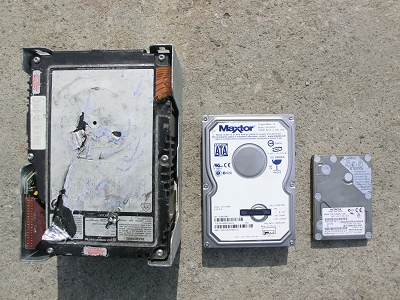
5.25 inches, 3.5 inches, 2.5 inches
Larger drives can accommodate larger platters and were historically used for higher capacity, but they take up more space. With improved recording density, smaller HDDs can now provide large capacities.
For these reasons, 5.25-inch HDDs are no longer commonly used.
Today, 3.5-inch drives are common for desktop computers, while 2.5-inch drives are common for laptops.
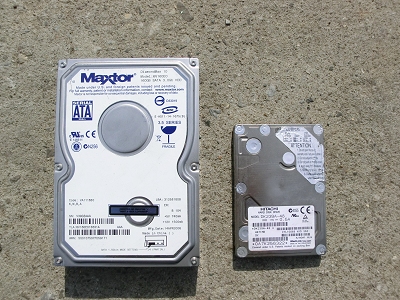
3.5-inch, 2.5-inch
Another difference is the interface used to connect to the computer. For example...
- ESDI
- SCSI
- IDE
- SATA
- SAS
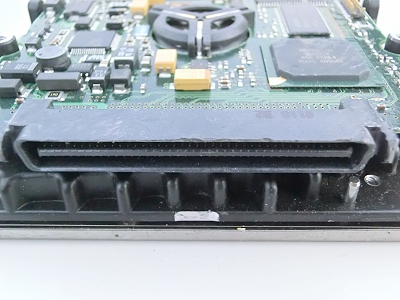
SCSI (multiple types available)
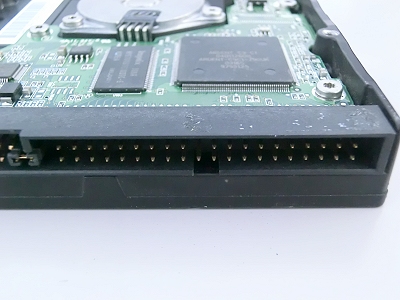
IDE (3.5-inch)
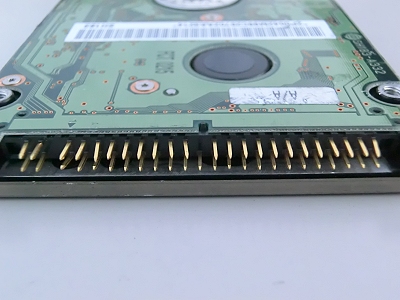
IDE (2.5-inch)
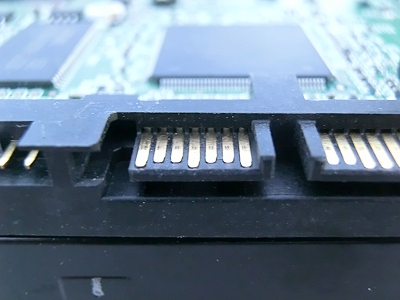
SATA (3.5-inch)
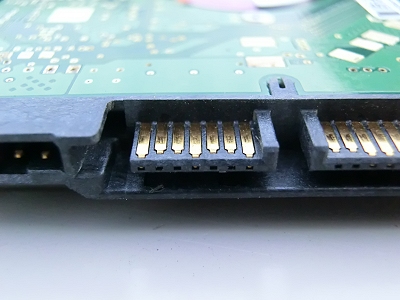
SATA (2.5-inch) ← Same shape as SATA (3.5-inch)
ESDI is an older interface seen around the era when 5.25-inch drives were common.
SCSI was often used in server applications in the past.
IDE was widely used in personal computers and was later replaced by SATA as requirements changed.
SAS is commonly used in servers.
SATA and SAS cables are also slim, which can help reduce congestion inside a computer case.
Hdds as Scrap and Changes in Circuit Boards Over Time
HDD circuit boards contain recyclable metals, but board design has changed over time.
In general,
- Circuit boards have become smaller
- The amount of rare metals used in circuit boards has decreased
Below are examples of how 3.5-inch HDD circuit board size can vary by generation.
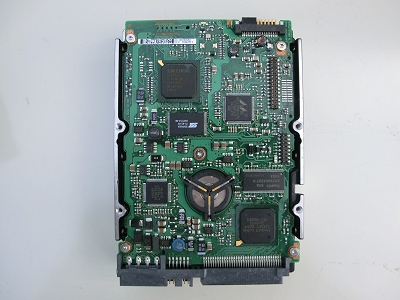
The entire board is board! (Old SCSI hard disk)
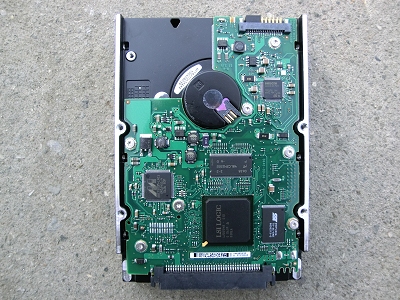
The top left corner is gone! (Old SCSI hard disk)
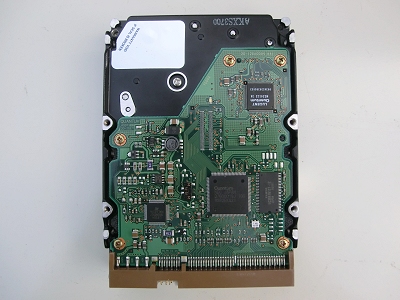
Not only the top left corner, but the top right corner is gone too! (Old IDE hard disk)
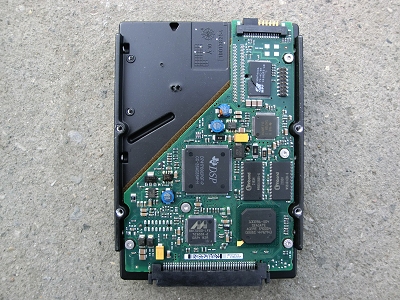
The board is smaller thanks to a "diagonal cut"! (Old SCSI hard disk)
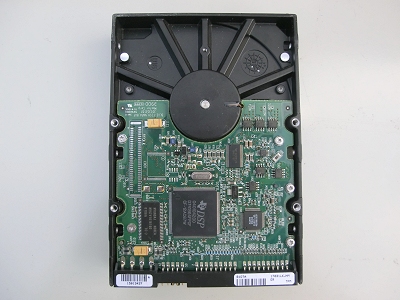
No doubt about it! It's getting smaller! (Old IDE hard disk)
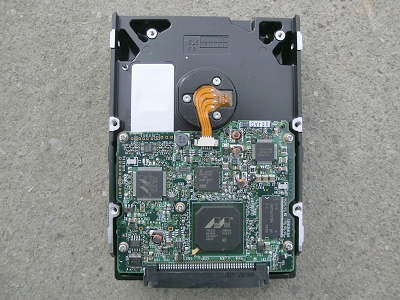
The board area is about 55% of what it used to be! (SCSI hard disk)
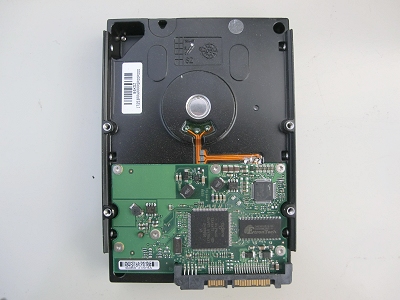
Huh? (SATA hard disk)
Advances in manufacturing allow for high performance with smaller boards and reduced use of rare metals. This benefits product cost and availability, but from a recycling standpoint it can reduce recoverable value.
This same trend is also seen in other computer circuit boards, such as motherboards.
Increasing Use of Ssds
Solid-state drives (SSDs), which are faster than HDDs, have become increasingly common.
While SSDs have not completely replaced HDDs in all applications, increasing capacities and lower manufacturing costs may continue to shift the market away from HDDs over time.
Hard Disk Drive Examples We Handle
Because we handle a large volume of HDDs, you may see many types when walking through our facility.
Some examples are shown below.
Where available, the year of manufacture is noted as a reference for how circuit board design has changed over time. We will add more examples gradually.
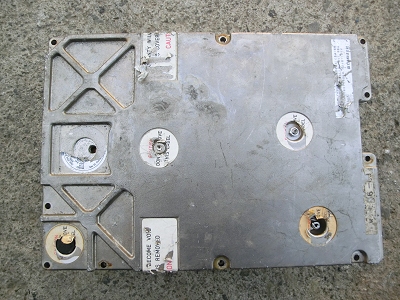
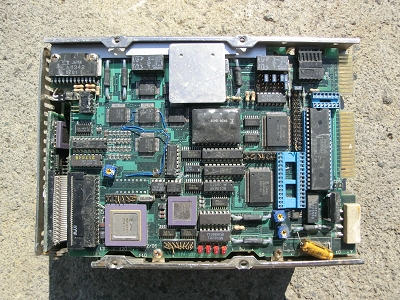
Fujitsu M2249E 5.25-inch 306MB ESDI 1989
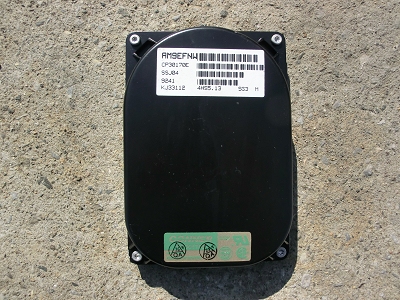
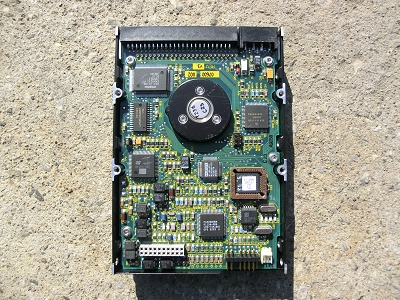
Conner CP30170E 3.5-inch 170MB SCSI-2 1994


Fujitsu M2616ESA 3.5-inch 105MB SCSI-1 1991
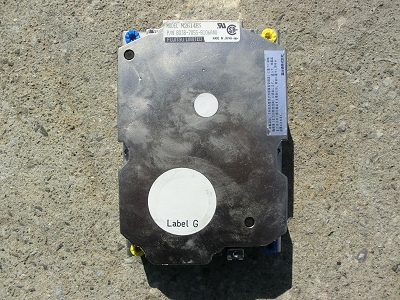
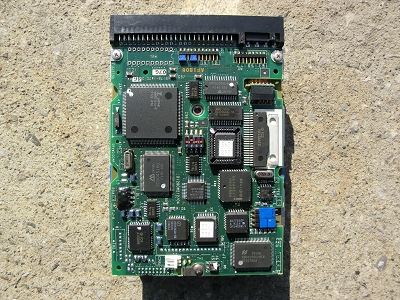
Fujitsu M2614ES 3.5-inch (thick) 182MB SCSI-1 1991
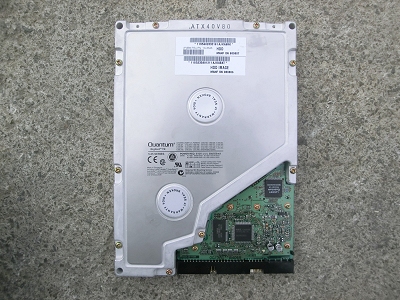
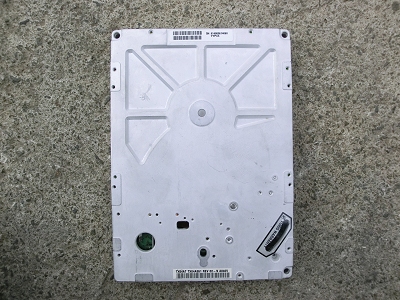
Quantum TX04AT 5.25-inch 4GB IDE 1998